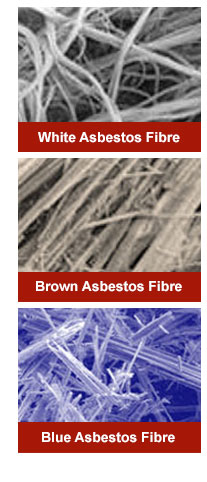
There were three types of asbestos very commonly used worldwide:
Chrysotile - white asbestos - Serpentine (curly)
Is the most commonly used asbestos fibre, the fibre is actually a softer fibre but very strong in tensile strength. Usually held firmly within other materials such as Portland cement or woven into textile products. Chrysotile is considered by some to be less dangerous than the other two types because a serpentine (curly) fibre is less likely to become trapped in the lungs and is less resistant to the body's immune cells.
Amosite - brown asbestos - Amphibole (needle-like)
Is the next most commonly used fibre which shares the similar properties of Blue Asbestos in that the fibre shape is also straight and needle like. This fibre has a better fire resistant and heat resistant property than both Blue and White and mainly found in the form of AIB (Asbestos Insulation Boards), these were used usually as fire and heat protection.
Crocidolite – blue asbestos – Amphibole (needle-like)
Blue asbestos has a particularly useful property in that it is a corrosive and chemical resistant type of fibre. It is not as common as white and brown but is considered the most dangerous because of the length and shape of the fibre (needle and sharp) Blue Asbestos is more likely to pierce or become trapped in the lung.